
In my recent article, I showed how families, teachers, and students framed school closures in redeveloping Hartford, CT. Stakeholders diagnosed the problem as a school closure that would split a community or take away a school from a deserving group.
But who or what was responsible?
In 2018, some teachers argued Hartford’s mayor was to blame.
Testimonies during the hearings were sharp, but rarely, if ever, named who or what was responsible for school closures in terms of people, positions, or any broader systems. As part of a broader case study, my peer-reviewed, published article focused on the testimonies and the broader systems, particularly school choice and land redevelopment.
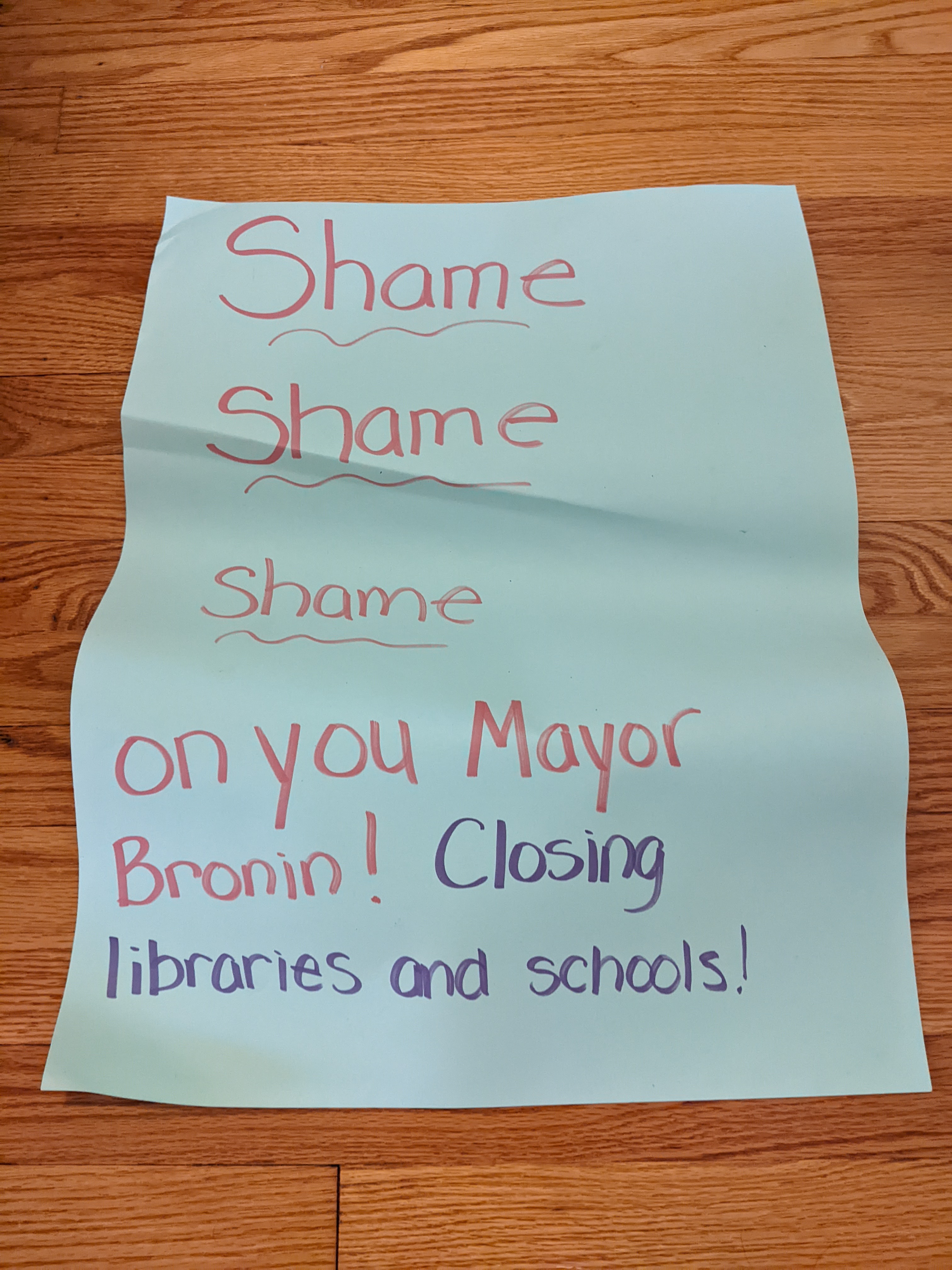
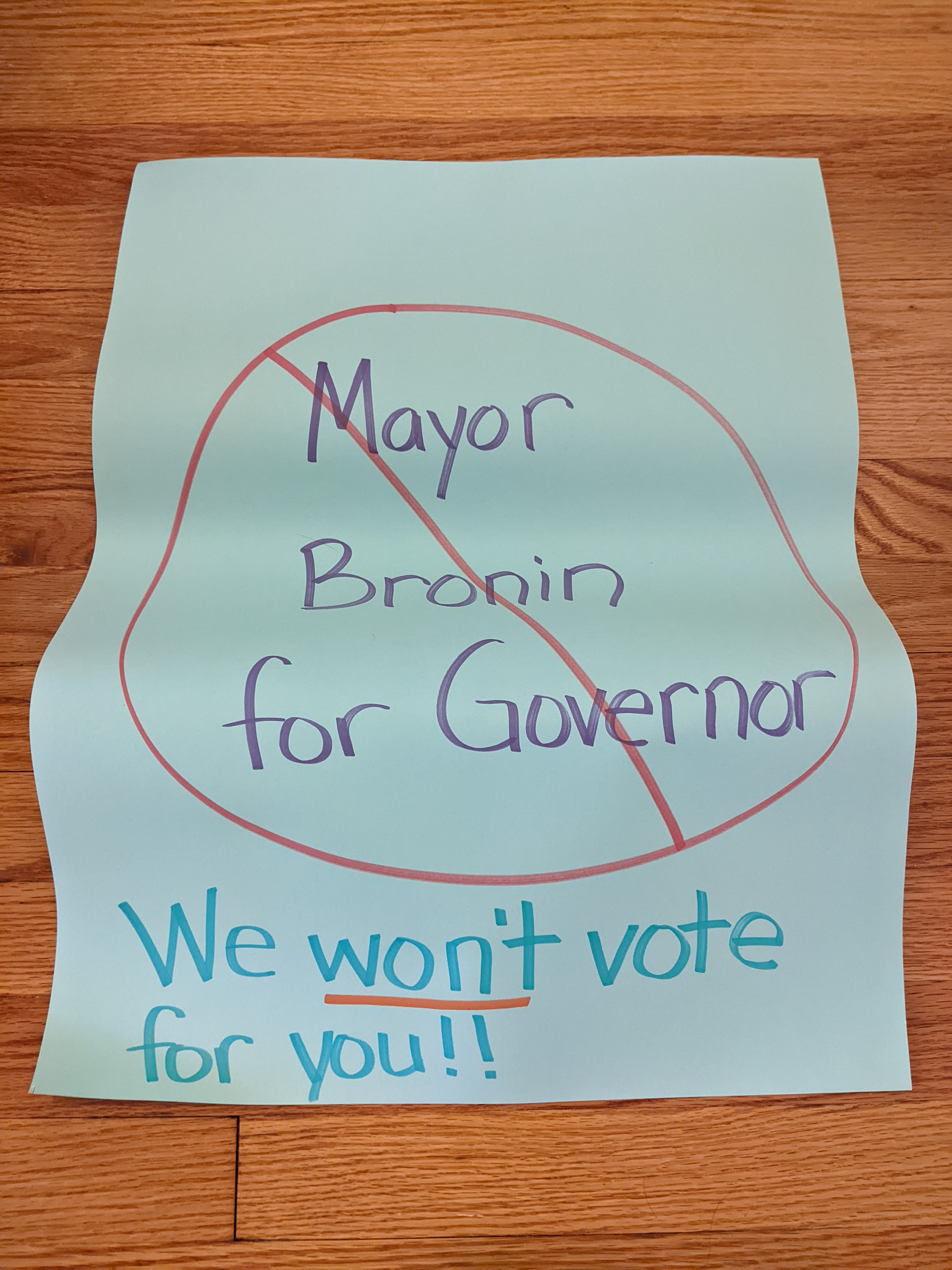
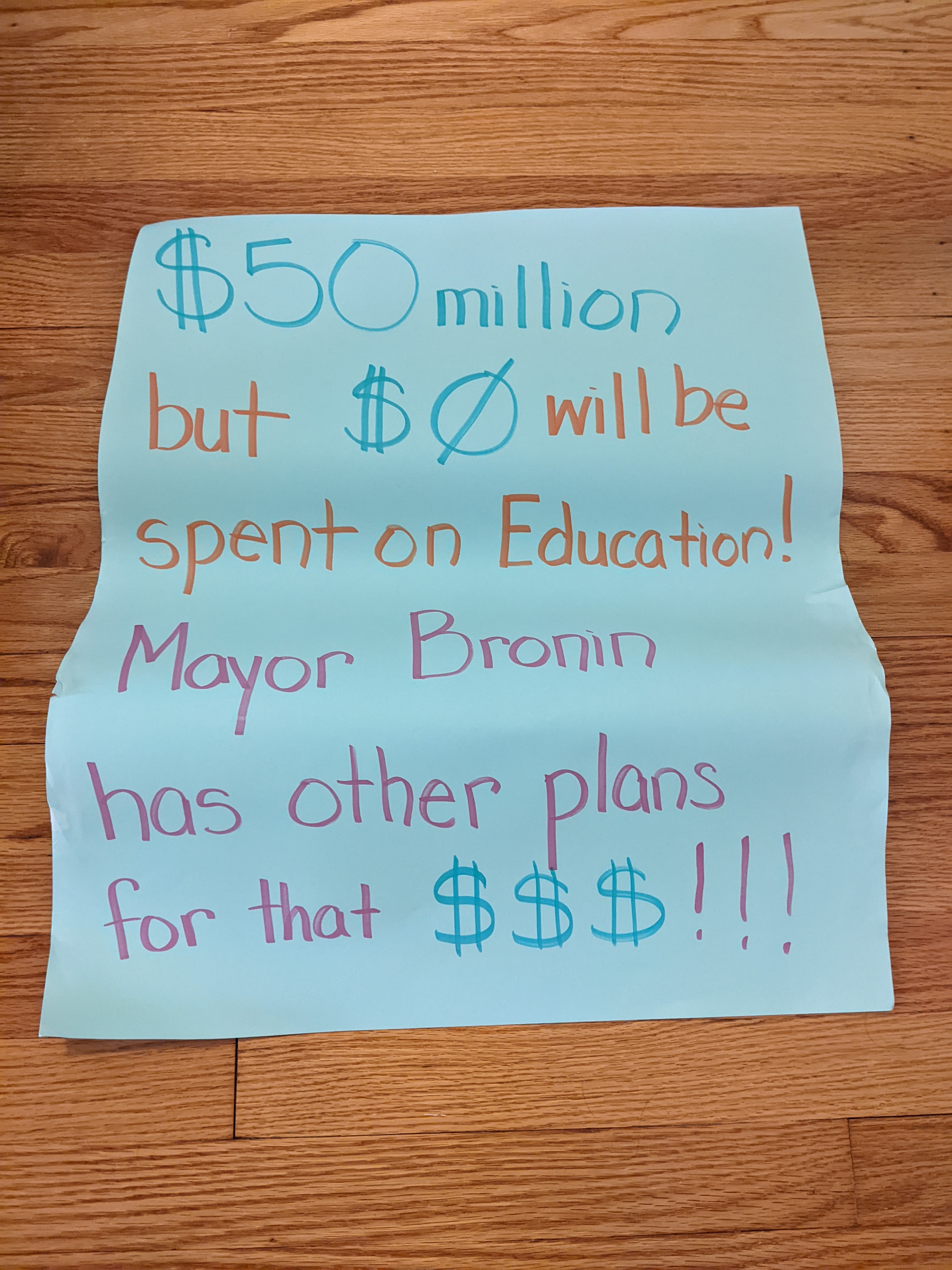
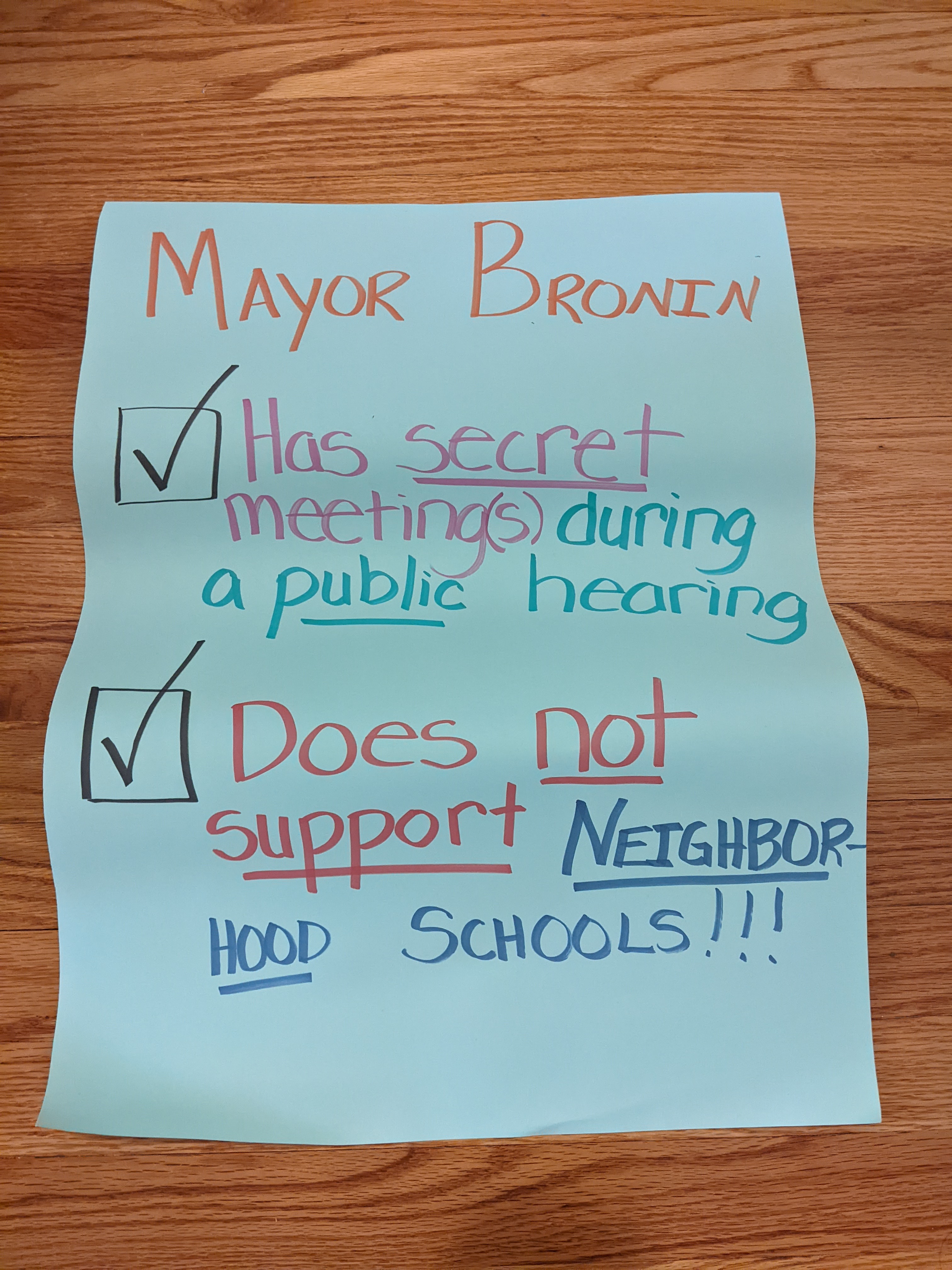
But this collection of anonymous posters used at various hearings also showed a deep knowledge of Hartford politics. These teacher posters add to our understanding of 2018 and today.
The series of posters blamed Hartford’s previous mayor as the primary actor behind school closures. The posters tried to shame the mayor for closing both public schools and libraries, going back on election promises to support neighborhood schools, having alternate plans for available public and private resources, and having aspirations of higher office as part of the abandonment of public education more broadly. This effort by public school teachers, among other groups, to hold the mayor directly responsible for permanent school closures seems forgotten or ignored.
Even before the school board voted, Hartford’s mayor indicated support of a plan to close neighborhood public schools. The final plan included closure of Batchelder, a mostly Puerto Rican and Latino student school, and Simpson-Waverly, a primarily Black student school with increasing numbers of Latino students.
When the school board did vote (one month after I left the board as an elected member), it imposed the shut down of two schools at the end of the school year. This decision gave families only several months to find new schools or be placed in others.
One neighborhood school – Batchelder – would be replaced by a magnet school that was supported by the former mayor in a past moment. I call this non-voluntary process in Hartford and other cities desegregation by dispossession. The whole plan displaced more than 600 children and impacted many other schools and more closed schools afterwards. In total, the plan stated that roughly 2,000 children would be impacted by school closures and changes to the district.
The closures had a questionable benefit to schools and students. And they added to the decrease in the district’s student enrollment as some students simply left the district that intentionally displaced them. Importantly, the closures that saved few actual dollars stood starkly in contrast to tremendous spending and lending for publicly-subsidized land redevelopment for privately-owned projects, particularly for “luxury” apartment construction in and around downtown.
But was/is Hartford’s mayor responsible for these school closures in 2018?
Like many other American cities, the Hartford Public Schools district has a regressive mayoral-controlled board of education under a “strong mayor” system. This came through a change to the city charter in the early 2000s. In Hartford, the mayor now appoints five out of nine board of education members to serve four-year terms. This means the majority of the board is appointed by the mayor. This can also include the mayor if they appoint themselves to the board. As it is currently arranged, the mayor has institutional power and control of the Hartford school board.
In 2018 (and today), Hartford’s mayor was not on the school board. But the mayor appointed the majority, or five out of nine members. This included some appointees directly and indirectly under the supervision of the mayor as employees of the city or related entities. The mayor also largely controlled the budget of City of Hartford. Moreover, the mayor was a member of the Capital Region Development Authority (CRDA) in charge of much of the publicly-subsidized land redevelopment.
Last, the former mayor was an assistant of the former governor at the time who steered the state budget in conjunction with the Legislature. These offices – Governor and Legislature – also provided financial backing to Hartford to avoid bankruptcy in 2018. In this case, the governor also wanted to close Hartford schools. In other words, the strong mayor system has power, but also some limits.
As the strong-mayor setup arranged, the mayor had power over the school board and fiscal outlook of the city. But there were also external systems, arrangements, and financial interests beyond the mayor.
However, this small group of teachers that protested saw the former mayor’s responsibility to stop neighborhood school closures in 2018. And they saw the shift in priorities away from public funds to make new private profits that was facilitated by the mayor. Today the city is still recovering from this ongoing regressive project pushed by previous mayors, including the last, with currently more discussion of school closures and nearly unquestioned land redevelopment.


